
The medical device industry is evolving rapidly, demanding faster development cycles while ensuring compliance with strict regulatory standards. Traditional Waterfall development methods, which follow a linear approach, often struggle to keep pace with the complexity and uncertainty in this field. To address these challenges, many organizations are turning to Scaled Agile for medical devices, a framework designed to improve workflow efficiency, adaptability, and collaboration across large-scale projects.
Why Move from Waterfall to Agile?
Medical device development is inherently complex, involving multiple stakeholders, regulatory constraints, and long product life cycles. Agile provides a way to:
- Adapt quickly to new requirements and regulatory changes.
- Foster a culture of continuous learning and improvement.
- Increase efficiency by eliminating unnecessary delays and rework.
While Agile emphasizes flexibility, it doesn’t mean abandoning structure. A hybrid approach—combining Waterfall and Agile – is often necessary to maintain compliance while gaining the benefits of Agile methodologies.
What is Scaled Agile and Why is it Necessary?
Agile product teams cannot work in isolation, especially in large, multi-disciplinary medical device projects. Scaled Agile Framework (SAFe) provides structured methodologies to integrate Lean, Agile, and DevSecOps principles, ensuring collaboration across teams and departments.
By adopting Scaled Agile, companies can:
- Improve coordination across multiple teams working on different system components.
- Ensure compliance while maintaining speed and efficiency.
- Enhance stakeholder collaboration through structured planning and feedback loops.
A core concept in Scaled Agile is flow – the smooth transition of work through the entire value stream with minimal handoffs, delays, and rework.
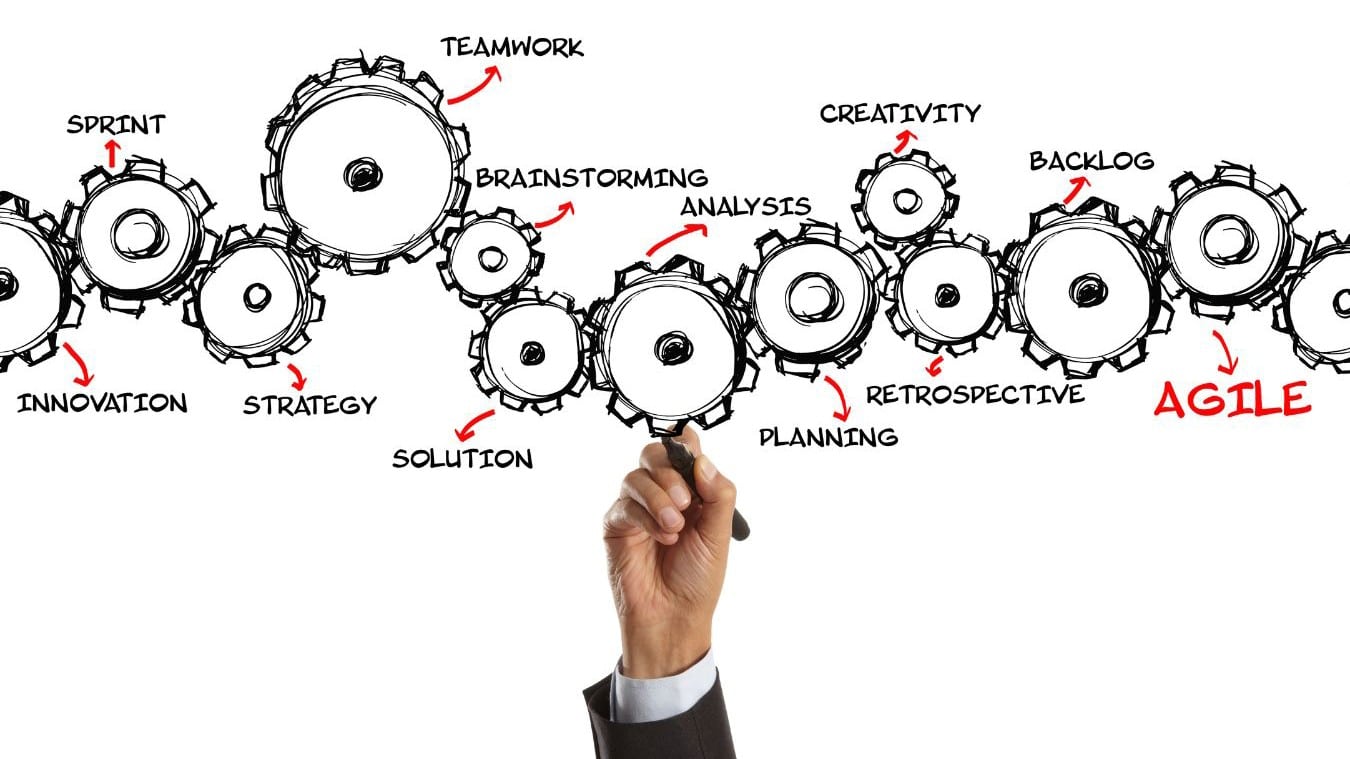
Key Considerations for Implementing Scaled Agile in Medical Devices
Transitioning to Scaled Agile in the regulated medical device industry comes with unique challenges. Some key factors to consider:
- A hybrid approach is often necessary – Agile does not fully replace Waterfall due to regulatory documentation requirements.
- Systems thinking is crucial – Teams must understand how different components interact within the entire system.
- Regulatory compliance must be prioritized – Stakeholders such as Regulatory Affairs (RA), Quality Assurance (QA), Cybersecurity, Validation (Val), and Usability need to be involved throughout the process.
- Delivery Leaders play a critical role – They act as the glue across departments, ensuring smooth execution.
- Educating executive management – Support from leadership is essential for successful Agile adoption.
Tools and Best Practices
To implement Scaled Agile effectively, organizations use tools like:
- Jira, Jira Align, Rally, and PI Planning apps for managing Agile workflows.
- Key Performance Indicators (KPIs) to track Agile adoption and process improvements.
- Scenario modeling to anticipate challenges and refine development strategies.

Improving Scaled Agile – A Mindset Shift
Successfully implementing Scaled Agile is not just about processes; it requires a cultural and mindset shift. Companies must:
- Encourage collaboration over rigid hierarchies.
- Empower teams to take ownership and make decisions.
- Balance speed with regulatory compliance to ensure product safety and effectiveness.
This post is based on materials from a presentation by Christian Hasselberg at Elekta, delivered at the American MedTech Summit 2024 in Chicago. The insights shared highlight the importance of Scaled Agile in transforming medical device development.
Want to learn more about the latest innovations in medical technology? Join us at the 2nd Annual American MedTech Summit in Chicago this April to gain first-hand insights from industry leaders. Don’t miss out – register today!
Conclusion
Transitioning from Waterfall to Agile to Scaled Agile is a journey that requires strategic planning, executive support, and a mindset shift. By integrating Scaled Agile principles, medical device companies can streamline development, enhance collaboration, and improve efficiency while maintaining compliance.
Adapting to Agile is not just about speed – it’s about creating a sustainable and innovative development process that ensures high-quality medical devices reach the market efficiently and safely.